Open-heart surgery
The chest is opened, the heart is stopped and a heart–lung machine takes over. The diseased valve is removed and replaced.
AccessSternotomy
HeartStopped, on bypass
AnaesthesiaGeneral
Coronary and structural heart interventions
Transcatheter aortic valve implantation: a new heart valve delivered through an artery, without opening the chest.

The heart, treated from inside the vessels.
An interventional cardiologist treats the heart and arteries without open surgery.
Through a small puncture at the wrist or groin, thin instruments are guided under X-ray to widen narrowed arteries, place stents or replace a heart valve. The chest is not opened, and recovery is usually much shorter.
Also referred to as an endovascular surgeon.
Diagnoses heart disease and treats it with medication.
Operates on the open heart.
Treats through the vessels. The chest stays closed.
It opens and closes in a fraction of a second, without a single pause, for a whole lifetime. When it stiffens, the entire heart starts working for one valve.
With age its leaflets can thicken and calcify. The opening narrows. This is aortic stenosis.
The heart has to push blood through a gap that keeps getting smaller. Breathlessness, chest pain and fainting follow.
Aortic stenosis is the most common valve disease requiring intervention in Europe and North America.
Once symptoms appear, severe aortic stenosis worsens quickly without valve replacement.
the only option was open-heart surgery, and for many patients the risk was too high.
The chest is opened, the heart is stopped and a heart–lung machine takes over. The diseased valve is removed and replaced.
Through a puncture in the groin, a new valve travels on a catheter and is expanded inside the old one. The heart keeps beating.
A puncture of the femoral artery at the groin. No incision in the chest.
Under X-ray guidance, the compressed valve travels on a catheter through the aorta to the heart.
Inside the narrowed native valve, the frame expands and the new leaflets take over its work.
Recovery is usually much shorter than after open-heart surgery.
TAVI procedures performed
Each mark is one patient who received a new aortic valve through an artery, without opening the chest.
Emergency PCI in acute myocardial infarction
Candidate of Medical Sciences (PhD)
Endovascular training completed, Bakulev Center
Transcatheter aortic valve implantation for severe aortic stenosis.
Coronary angiography, angioplasty and stenting, including emergency PCI in acute myocardial infarction.
Reopening chronically occluded arteries (CTO), guided by intravascular imaging: IVUS, OCT, FFR.
PFO and ASD closure with occluder devices; carotid, renal and lower-limb arteries.
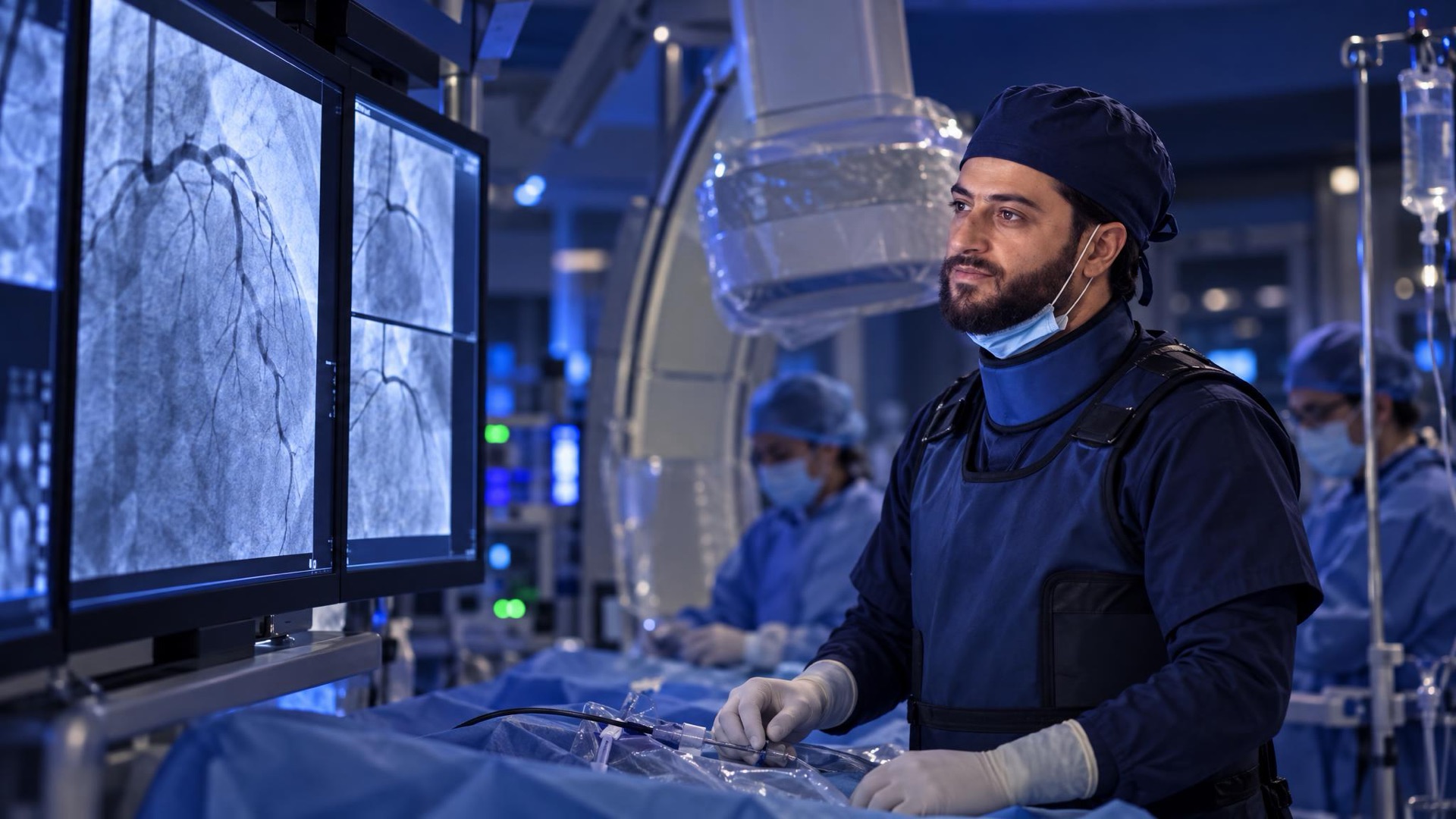
A heart attack does not wait for office hours. When a coronary artery closes, every minute without blood flow costs heart muscle. The job is to open that artery, often at night, often in patients other teams consider too risky.
The blocked artery is reopened with a balloon and stent in the first hours of a heart attack.
Chronic occlusions, heavy calcification, high surgical risk. Cases that need experience, not routine.
Interventional cardiologist, anaesthesiologist, nurses and radiographers working as a single unit.
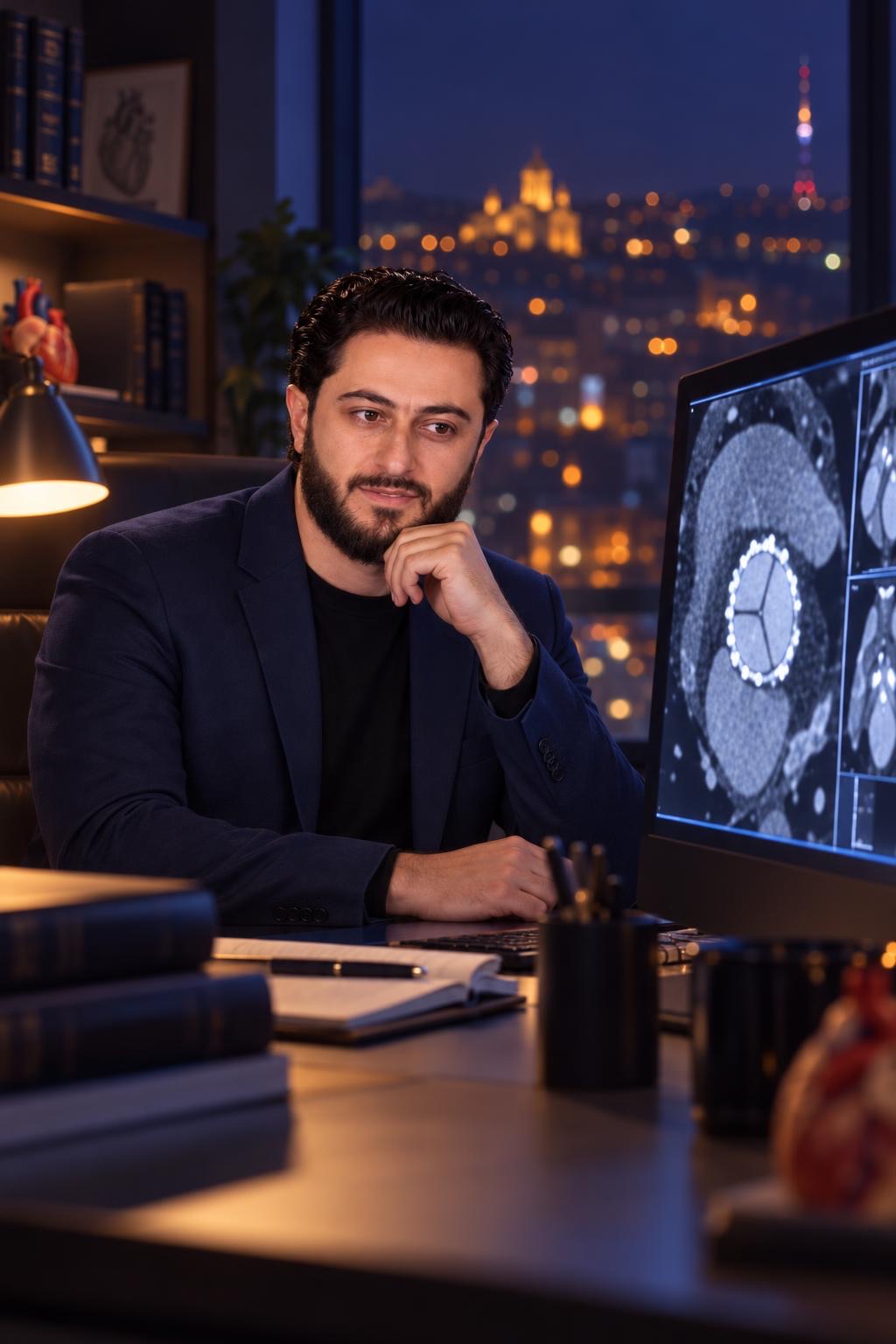
Medicine in Yerevan, endovascular surgery in Moscow, a doctorate at home. And every year, more of the cases others would rather not take.
Medical degree. General medicine first, then a deliberate choice of cardiology.
Training in endovascular cardiac surgery at one of the leading cardiac centres of the region: coronary interventions, complex anatomy, structural heart procedures.
Thesis defended in February 2026, research in interventional cardiology.
Planned and emergency coronary interventions and TAVI, building transcatheter valve practice in Armenia.
The questions patients, colleagues and journalists ask most often, answered in one place.
Dr. Arshak Apoyan, an interventional cardiologist in Yerevan, performs transcatheter aortic valve implantation (TAVI). He has performed more than 55 TAVI procedures.
TAVI is the replacement of a narrowed aortic valve through an artery, without open-heart surgery. A new valve is delivered on a catheter from the groin and expanded inside the old one.
A cardiac surgeon operates on the open heart. An interventional cardiologist treats the heart through the vessels, with catheters under X-ray guidance. The chest is not opened.
In Yerevan, Armenia. He performs coronary, emergency and structural heart interventions, including TAVI.
By email or LinkedIn. The contacts are listed at the bottom of this page.
TAVI treats severe aortic stenosis. It is most often recommended for older patients and for those for whom open-heart surgery carries a high risk. The decision is made by a heart team after an echocardiogram and a CT scan.
Usually not. In most cases TAVI is performed under local anaesthesia with light sedation, through a puncture in the groin.
Most patients are on their feet the next day and go home within a few days, far sooner than after open-heart valve replacement.
A narrowing of the aortic valve, most often caused by age-related calcification. The heart has to work harder; typical symptoms are breathlessness, chest pain, dizziness and fainting on exertion. Severe aortic stenosis is treated by replacing the valve, surgically or by TAVI.
Yes. He performs emergency coronary stenting (primary PCI) in acute myocardial infarction, around the clock.
Coronary angiography, angioplasty and stenting (PCI); reopening of chronic total occlusions (CTO) guided by IVUS, OCT and FFR; PFO and ASD closure; carotid, renal and lower-limb artery interventions.
He graduated from Yerevan State Medical University, trained in endovascular surgery at the Bakulev Center in Moscow (2019) and holds the degree of Candidate of Medical Sciences (PhD, 2026). He works in Armenian, Russian and English.
Through the vessel. Not through the chest.
For colleagues, conference organisers and partner clinics.
Patients are seen by referral through the clinic.